
O Ring
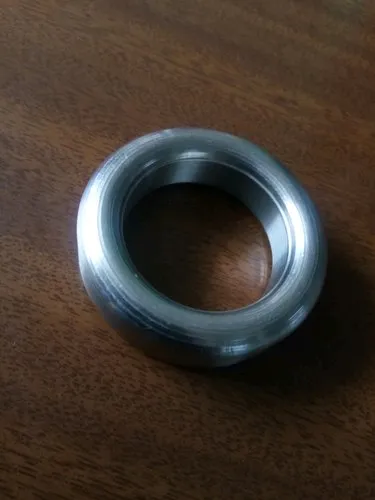
An O-ring is a circular gasket made of elastomer, typically rubber, used to create seals between two parts. It's designed to be compressed in a groove, forming a tight seal against pressure or vacuum. O-rings are used in various applications, including static (stationary) and dynamic (moving) seals.
Here's a more detailed description:
Key Characteristics:
- Shape: Round cross-section, resembling a torus or doughnut.
- Material: Typically made of elastomers like rubber, but can also be made of PTFE or metal.
- Function: Creates a seal by compressing against mating surfaces in a groove.
- Applications: Used to seal pipes, tubes, pistons, cylinders, and various other interfaces in static and dynamic applications.
How it works:
- The O-ring is installed in a groove between two parts.
- When pressure is applied, the O-ring compresses, deforming to fill any gap and creating a tight seal.
- The O-ring's elasticity allows it to return to its original shape after the pressure is removed, maintaining the seal.
Materials and Considerations:
-
Elastomers:
O-rings are commonly made of elastomers like Nitrile Rubber (NBR), FKM (Viton), Silicone, and EPDM.
-
Temperature and Chemical Resistance:
The choice of material depends on the specific application, considering factors like temperature range, chemical resistance, and other environmental factors.
-
Squeeze:
The amount of compression or "squeeze" is crucial for proper sealing. Squeeze is the difference between the O-ring's outer diameter and the groove diameter.